Large Victoria Sponge Recipe, A Big Cake for a Crowd
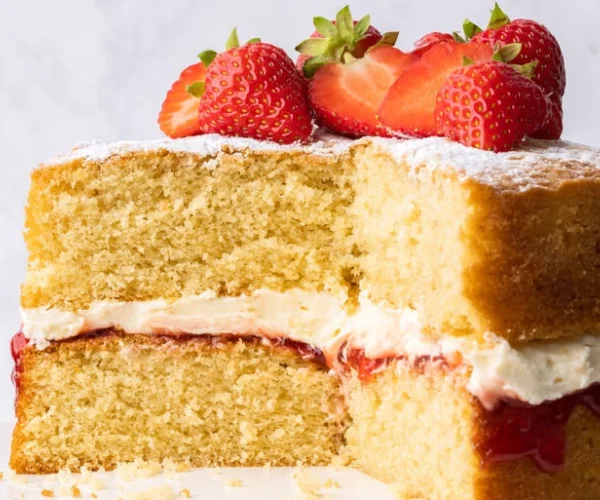
This Large Victoria Sponge Recipe scales up the classic British cake to feed a crowd. Baked in bigger, deeper tins, it produces tall, soft sponge layers filled generously with jam and cream, making an impressive centrepiece for parties, big family gatherings and celebrations. When you need to serve twelve or more people, this generous sponge is the answer. Scaling up a Victoria sponge is easy once you keep the classic ratio in balance.
This recipe uses six eggs with matching quantities of butter, sugar, and flour, giving two substantial layers that are still light and tender. It is the same beloved cake, simply made bigger for a bigger occasion. A large Victoria sponge looks wonderfully generous on the table and slices into plenty of portions, so no one misses out. It is perfect for birthdays, christenings, summer parties, and any event where you want a classic cake that feeds the whole room. Below you will find the full ingredients, a step-by-step method, expert tips for baking a large, even sponge, plus variations, storage advice, and answers to common questions.
How to Scale Up a Victoria Sponge
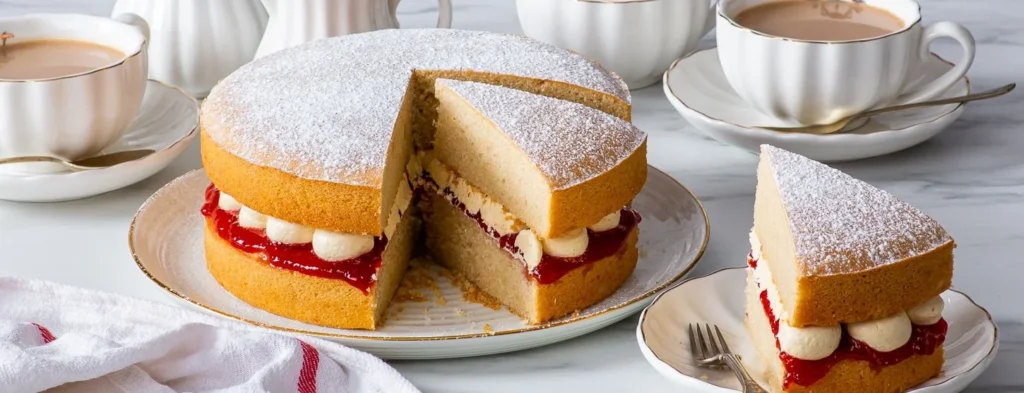
Scaling up a Victoria sponge simply means keeping the same ratio of butter, sugar, flour, and eggs while increasing the quantities. This recipe uses six eggs and 350g each of the main ingredients, which fill two larger or deeper tins. The key is to use tins big enough to hold the extra batter and to allow a little more baking time so the centre cooks through. Because a larger cake takes longer to bake, it is important to check the middle carefully with a skewer. With the right tins and a little patience, a scaled-up sponge bakes just as beautifully as the standard size, only grander.
Why You’ll Love This Recipe
This generous cake is made for sharing.
If you need a classic cake that serves a big group without any fuss, this large Victoria sponge delivers on both flavour and scale.
Ingredients You Will Need
For the Sponge
For the Filling
Key Ingredient Notes
The quantities are scaled up to six eggs with matching amounts of butter, sugar and flour, keeping the classic ratio intact so the large sponge stays light and tender despite its size. A little more baking powder helps the bigger, deeper layers rise well, and a splash of milk loosens the larger batch of batter to the ideal soft-dropping consistency.
Soft butter and room-temperature eggs are especially important with a large quantity, as they blend more smoothly and trap the air needed to lift a bigger cake. A generous amount of jam and plenty of softly whipped cream fill the large layers, keeping the balance of flavours right across the whole cake.
Equipment You Will Need
Larger, deeper tins are essential to hold the extra batter, so use two 23cm deep sandwich tins. A stand mixer makes light work of the bigger quantity. Grease and line the tins well, and preheat the oven fully before baking.
How to Make a Large Victoria Sponge
- Preheat the oven to 180C, or 160C fan. Grease and line 23cm deep tins.
- In a bowl, beat together the butter, sugar, flour, eggs, baking powder, and vanilla for 2-3 minutes, or until smooth. If very thick, add milk to thin.
- Pour the batter into the two tins (about the same amount) and top each tin with the batter.
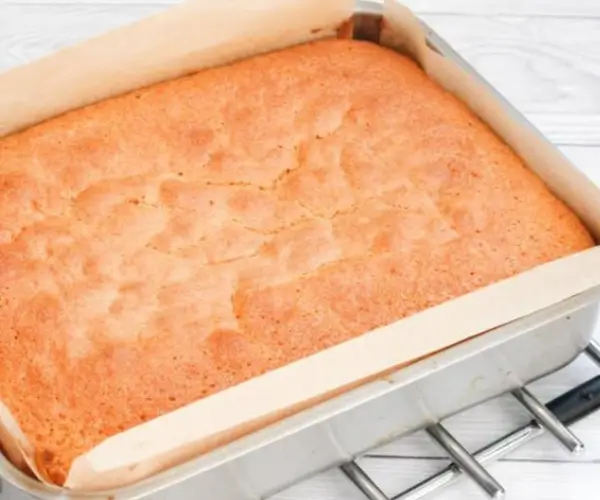
- Bake until golden, springy, and a skewer inserted into the center comes out clean; approximately 30-35 minutes.
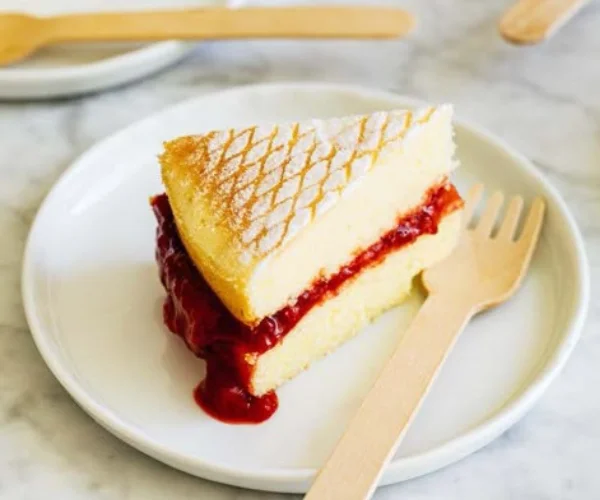
- Spoon a good amount of jam on top of one sponge and top with whipped cream.
- Top with the second sponge, dust with sugar, and serve.
Expert Tips
Allow More Baking Time
A larger, deeper cake takes longer to bake through than a standard sponge. Give it extra time and always test the centre with a skewer before removing it.
Use Deep Tins
Deeper tins hold the extra batter and give tall, impressive layers. Make sure they are well greased and lined so the big sponges turn out cleanly.
Cover if Browning Too Fast
If the tops brown before the middle is done, lay a piece of foil loosely over them so the centre can finish baking without over-colouring.
Cool Fully Before Filling
A large cake holds heat longer, so allow plenty of time for the layers to cool completely before adding the cream.
Common Mistakes to Avoid
|
Common Mistake |
Why It Happens |
How to Avoid It |
|---|---|---|
|
Underbaking the Centre |
A large cake takes longer to cook in the middle, even when the edges appear fully baked. |
Always test the centre with a skewer before removing the cake from the oven. If it comes out with wet batter, bake for a few more minutes. |
|
Using Tins That Are Too Shallow |
A large amount of batter can overflow during baking if the tins are not deep enough. |
Use deep cake tins that provide enough space for the batter to rise without spilling over. |
|
Overbeating the Big Batch |
Mixing a large quantity of batter for too long removes trapped air, resulting in a dense sponge. |
Beat the ingredients only until the batter is smooth and evenly combined to keep the cake light and fluffy. |
Delicious Variations to Try
Why This Recipe Works
The recipe works due to the retention of the classic proportions despite the increased amount, which means that the big sponge is going to have the same delicate structure as the regular one. Thanks to the use of baking powder in increased amounts and adding some milk to the mixture, the big sponge will rise and remain soft. With the help of deep tins and the ability to spend more time in the oven, the sponge will bake perfectly.
Perfect Pairings
This crowd-pleasing cake suits all the classic party accompaniments.
These pairings make the large sponge the perfect centrepiece for a party spread.
How to Serve
Serve the large sponge at room temperature so the crumb is soft and the cream is light. Because it is a big cake, use a long, sharp knife to cut clean, even slices, wiping the blade between cuts. It will serve twelve or more, so everyone can enjoy a generous portion. It makes a beautiful centrepiece for birthdays and celebrations, and it can be decorated simply with sugar or more elaborately with piped cream and fresh berries for a special occasion.
How to Store
At Room Temperature
A jam-only version keeps in a large airtight container at room temperature for up to two days.
In the Refrigerator
Once filled with fresh cream, store the cake in the fridge and eat within two to three days.
Freezing
The large plain layers freeze well for up to three months. Wrap them tightly and thaw at room temperature before filling.
Make It Ahead
For a big event, bake the large sponge layers a day ahead and keep them, unfilled, in an airtight container so they stay fresh. Whip the cream and assemble the cake close to serving time for the best result. The plain layers can also be frozen in advance, which is a great help when preparing for a party. Simply thaw and fill on the day to take the pressure off.
Extra Tips for a Large Even Sponge
A few final habits ensure your big cake bakes beautifully.
With these steps, your large Victoria sponge will be tall, even, and impressive every time.
Nutritional Information
Nutritional values vary with ingredients and slice size. As a rough guide, a slice provides around 360 to 430 calories, along with carbohydrates, sugar, and fat. Cutting smaller slices for a big group will reduce this. These figures are approximate and for guidance only.
Planning a Cake for a Big Event
When you are catering for a crowd, a little planning makes all the difference. Bake the large layers the day before, and prepare any decorations in advance, so that on the day itself you only need to whip the cream and assemble the finished cake. Think about transport too. If the cake needs to travel to a venue, a firmer buttercream filling holds the tall layers together far better than fresh cream, and a sturdy cake box or board will keep it safe and looking its best on arrival.
Can I make one very large layer instead of two?
It is better to bake two layers, as a single very deep cake takes much longer to bake through evenly and can dry out at the edges before the centre is done.
How far ahead can I bake a large sponge?
Bake the layers up to a day ahead and store them airtight, or freeze them further in advance. Fill and decorate on the day for the freshest result.
Can I make a large cake dairy-free?
Yes. Use a dairy-free baking block, plant milk, and a dairy-free cream or buttercream to scale up a dairy-free version for a crowd.
How do I keep the layers level?
Weigh the batter evenly into each tin and, if the baked layers dome, trim the tops gently with a serrated knife so the cake stacks neatly.
What is the best filling for a large celebration cake?
Buttercream is often best for a large cake, as it is sturdy and holds the tall layers securely, which is especially useful if the cake needs to be moved or displayed.
Conclusion
This Large Victoria Sponge Recipe is the perfect way to bring a classic British cake to a crowd. Scaled up with the ratio kept in balance, it produces tall, soft layers filled with jam and cream that make an impressive centrepiece for any celebration. Generous, delicious, and easy to decorate, this big sponge ensures no one misses out at a party or gathering. When you need a classic cake to feed the whole room, this is the recipe to reach for.